Hybrid work reshaped how Pakistani companies communicate, and the humble desk phone changed with it. Today the conversation around Fanvil IP Phones in Pakistan centres on video, smart interfaces, and endpoints that behave more like small collaboration hubs than simple telephones. That shift matters whether your team sits in Karachi, Lahore, or a distributed setup across several cities.
This article looks at why smart video phones are gaining ground, what to check before you deploy them, and how a flagship model can unify voice and face-to-face calls on a single device. If your business still relies on scattered apps for calls and video, the case for consolidation is stronger than ever in 2026.
Why Fanvil IP Phones in Pakistan Are Going Video
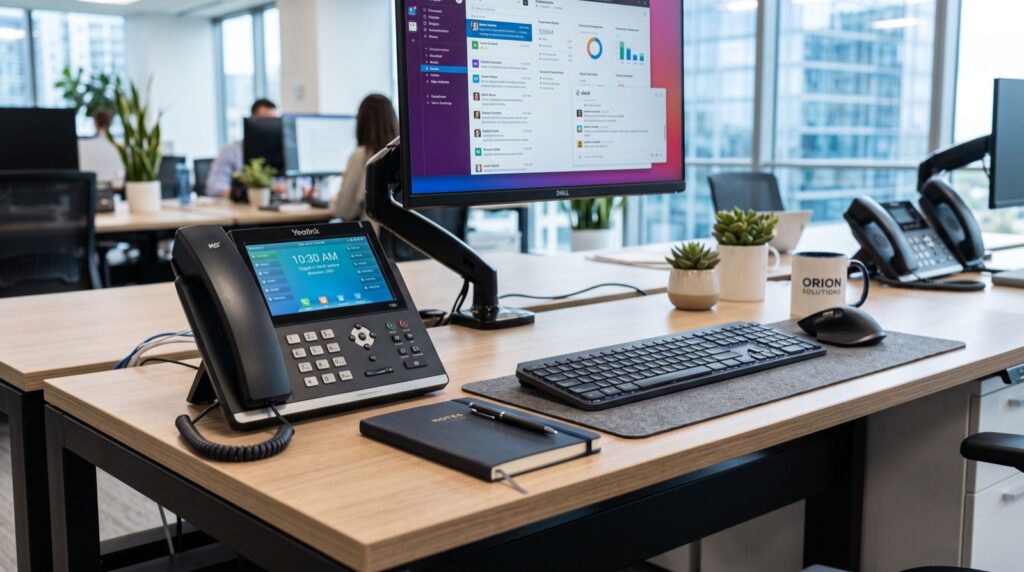
Voice alone no longer covers modern collaboration. Managers want quick face-to-face check-ins, sales teams want richer client conversations, and remote staff want a reliable point of contact that does not depend on a laptop. A smart video phone answers all three at once. This is why the newest Fanvil IP Phones in Pakistan lean heavily toward touchscreen, video-capable designs.
Because these devices run on open SIP signalling, they slot into the platforms Pakistani businesses already use. The protocol foundation is defined in the IETF SIP standard, which keeps your hardware portable across PBX and cloud providers rather than locked to one vendor.
The Bandwidth Question
Video needs headroom. Before rolling out video phones nationwide, confirm your upload speeds and prioritise voice and video traffic on the network. Poor QoS ruins even the best hardware.
- Set aside a voice VLAN and apply Quality of Service rules.
- Estimate roughly 0.5 to 2 Mbps per active video call, both ways.
- Test in branch offices, not just the head office, before scaling.
Meet the Flagship: Fanvil V67
The Fanvil V67 Flagship Smart Video Phone represents the top of the smart-endpoint range. It combines a large touchscreen, a built-in or attachable camera experience, Android-style smart features, and enterprise-grade SIP calling in one desk device.
Instead of juggling a phone, a webcam, and a separate app, staff get a single unit that handles voice, video, and productivity tools. For executives and hybrid teams across Pakistan, that consolidation reduces clutter and support tickets alike.
Where the V67 Shines
The V67 suits leadership desks, meeting rooms, and any role where face-to-face contact adds value. Its smart interface also lets IT push apps and configurations centrally, which simplifies fleet management for companies with offices in more than one city.
Smart Video Phone vs Standard Desk Phone
It helps to see the difference side by side. The table below contrasts a flagship smart video phone with a conventional voice-only handset so you can decide where each belongs.
| Capability | Fanvil V67 (Smart Video) | Standard Voice Handset |
|---|---|---|
| Display | Large colour touchscreen | Small colour or monochrome |
| Video calling | Yes, native | No |
| Smart apps | Supported | None |
| Camera | Integrated video experience | Not available |
| Best fit | Executives, hybrid teams, meeting rooms | General staff desks |
| Central management | App and profile push | Basic provisioning |
Always cross-check the exact 2026 specification against the manufacturer’s own listing. The official Fanvil website publishes current datasheets so your purchase order reflects the shipping model, not an older revision.
Planning a Nationwide Rollout
Deploying across multiple Pakistani cities introduces coordination challenges that a single-office install never faces. A phased plan keeps quality consistent from Islamabad to Karachi.
- Pilot in one office and lock down firmware and provisioning templates.
- Document network requirements so each branch prepares its LAN in advance.
- Roll out city by city, verifying call and video quality at each site.
- Train staff briefly on video etiquette and the smart interface.
- Keep spares and a clear support path for fast replacements.
For a smooth multi-site project, partner with reputable service experts who can standardise configurations and support every location. Consistency across branches is what makes a national deployment feel effortless.
Do Smart Video Phones Replace Meeting Software?
They complement it. A V67 handles quick internal video calls and one-to-one client meetings without booting a laptop, while large group webinars still suit dedicated conferencing platforms. Used together, they cover the full range of communication needs.
Integration With Existing Business Tools
A smart video phone earns its keep when it fits neatly into the software your teams already use. Modern endpoints link with directories, contact systems, and productivity apps, so staff spend less time searching and more time talking.
Look for phones that pull contacts from a central directory, so nobody manually types numbers. Presence indicators show whether a colleague is free, on a call, or away, which cuts down on failed transfers. When these integrations work smoothly, the phone feels like part of your workflow rather than a separate island.
- Directory sync: One source of truth for every extension and contact.
- Presence status: See availability before you dial or transfer.
- Call logging: Records that feed reporting and follow-ups.
- Programmable keys: Speed dials for frequent contacts and departments.
Supporting Remote and Branch Staff
Distributed teams are now normal across Pakistan. A smart video phone can register to your central system from a branch or a home office, giving remote staff the same extension and features as head-office colleagues.
This consistency matters. A remote employee who reaches the same directory, uses the same transfer keys, and joins video calls the same way stays fully integrated with the team. The phone becomes a reliable anchor that keeps distributed staff connected regardless of location.
Sustainability and Energy Use in 2026
Energy efficiency now factors into procurement decisions. Power over Ethernet reduces separate adapters, and many modern endpoints include low-power sleep modes that trim consumption during quiet hours.
Across a large fleet, those savings add up on both the electricity bill and your organisation’s environmental footprint. Choosing efficient hardware is a small choice that quietly supports broader sustainability goals while keeping running costs in check.
Total Cost of Ownership
Smart video phones cost more upfront than basic handsets, but the maths often favours them over time. Fewer devices, centralised management, and lower reliance on paid meeting seats add up.
- One device replaces a phone plus a separate camera setup.
- Central provisioning cuts IT time per deployment.
- Longer hardware life protects the investment across years.
Frequently Asked Questions
Are Fanvil IP phones in Pakistan compatible with cloud PBX systems?
Yes. Because they follow open SIP standards, Fanvil IP phones in Pakistan connect to most cloud PBX and on-premise platforms. Confirm codec support and request a provisioning test before you commit to a large order.
Does the Fanvil V67 need special internet for video?
It needs stable upload bandwidth and good QoS, not a special connection. Budget roughly 0.5 to 2 Mbps per video call and prioritise voice and video traffic on your network for smooth results.
Can a smart video phone be managed remotely across cities?
Yes. Flagship smart phones support central provisioning and app management, so IT can configure and update devices in every branch without visiting each site physically.
Is a video phone worth it for a small team?
If your small team does client calls or hybrid meetings, a single smart device can replace multiple tools and simplify daily work. For purely internal voice roles, a standard handset may be enough.
Conclusion
The move toward smart video changes what buyers expect from Fanvil IP phones in Pakistan. A flagship like the V67 unifies voice, video, and productivity on one desk device, cutting clutter and support overhead for hybrid teams. Plan your network, pilot carefully, and lean on experienced partners, and in 2026 your phone fleet becomes a genuine collaboration platform rather than a row of static handsets.