
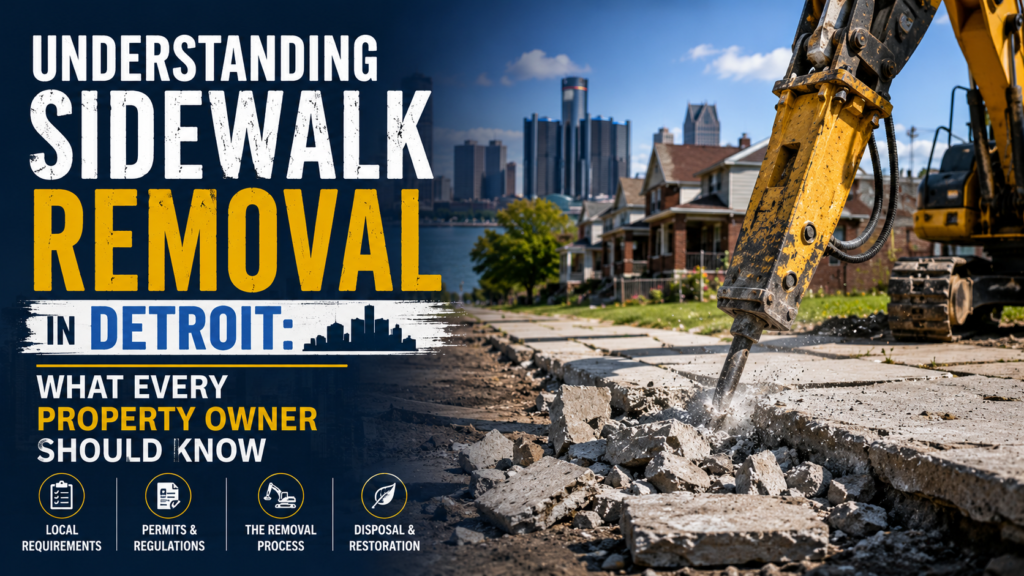
Sidewalks are among the most frequently used pieces of public and private infrastructure in any urban environment, and Detroit is no exception. With more than 4,200 miles of sidewalk spread across the city, the maintenance, repair, and occasional removal of these concrete pathways is an ongoing challenge that touches thousands of property owners each year. Whether a sidewalk has been cracked beyond repair by tree roots, damaged during utility work, or simply deteriorated past the point of safe use, understanding the removal process is essential for anyone who owns or manages property in the city.
This article explores the key aspects of Sidewalk Removal Detroit including what triggers the need for removal, how the process works, who bears responsibility, and what the city’s ongoing initiatives mean for residents and property owners.
Why Sidewalk Removal Becomes Necessary
Concrete sidewalks are built to last, but they are not indestructible. In Detroit’s climate, the freeze-thaw cycle subjects pavement to enormous stress each winter, causing concrete to crack, heave, and buckle over time. Tree roots are one of the most common culprits behind significant sidewalk damage, as roots growing beneath the surface can lift entire concrete panels, creating dangerous trip hazards. Underground utility work is another frequent cause of damage, since digging for water mains, sewer lines, or gas infrastructure inevitably disrupts the surrounding pavement.
In some cases, sidewalk removal is necessary not as a result of damage but to accommodate new construction or major renovation work. When a property is being redeveloped, the existing sidewalk may need to come out entirely to allow for proper grading, new utility connections, or an updated approach that meets current accessibility and drainage standards.
Who Is Responsible for Sidewalk Removal in Detroit?
One of the most commonly misunderstood aspects of sidewalk management in Detroit is the question of responsibility. Under city ordinance, the cost of sidewalk repair is the responsibility of the property owner whose land is adjacent to the damaged section. This means that in most cases, it is the property owner not the city who is legally responsible for ensuring that the sidewalk bordering their property is safe, properly maintained, and free from hazardous conditions.
There is one notable exception: sidewalks damaged by tree roots from trees located between the curb and the sidewalk the so-called “parkway” trees may qualify for repair or replacement under the city’s Tree Guarantee Policy. Property owners who believe their sidewalk damage was caused by a city-owned tree should report the issue through Detroit’s Sidewalk Damage Reporter tool or contact the City Engineering Permit Office. However, whether the city ultimately covers the cost depends on factors including budget availability, timing, and whether established criteria are met.
The Detroit Department of Public Works does have the authority to step in and perform repairs when a property owner fails to act after notification, and the city can then bill the owner for the cost of that work. Hardship protections exist for qualifying property owners, but the legal baseline remains clear: maintaining the adjacent sidewalk is the property owner’s obligation.
The Sidewalk Removal and Replacement Process
When sidewalk removal is required in Detroit, the process typically unfolds in several distinct stages. It begins with an inspection, during which a city inspector or contractor marks the sidewalk flags the individual concrete panels that require removal or replacement. The markings indicate the type and extent of work required at each location.
Before removal begins, property owners or occupants receive a door hanger notification three to five days in advance. On the day work starts, the crew sets up barricades and safety barriers around the affected area to protect pedestrians and passing traffic. A removal crew then breaks up and hauls away the existing concrete panels.
Once the damaged concrete has been removed, a separate crew re-grades the exposed soil and positions form boards to define the shape and thickness of the new sidewalk slab. This is also the stage where tree root trimming may occur if roots beneath the surface contributed to the original damage. After forming is complete, a third crew pours and finishes the fresh concrete. Curing typically takes up to seven days, during which time the new surface must not be walked on or driven over, as premature load can compromise the structural integrity of the slab.
Detroit’s Citywide Sidewalk Programs
Detroit has made substantial investments in sidewalk infrastructure over recent years. The city has more than three million individual sidewalk flags on residential streets, and estimates have placed roughly fifteen percent of those panels in need of replacement at various times. Recognizing the scale of the problem, city leadership has launched expanded programs to address the backlog.
A notable example was the launch of a dedicated sidewalk replacement program funded with twenty-five million dollars, made possible in part by surplus budget funds approved by Detroit City Council. Under that initiative, priority was given to replacing damaged sidewalks near schools, churches, and parks, as well as those identified by registered neighborhood block clubs. Up to seventy thousand damaged or missing sidewalk sections roughly eighty miles of pavement were targeted for replacement during a single construction season.
Construction season for sidewalk work in Detroit generally runs from May 1 through mid-November, reflecting the city’s climate constraints on fresh concrete placement. Work performed outside this window risks frost damage and premature failure.
Permits and Compliance
Any property owner undertaking sidewalk removal as part of a private project must obtain the appropriate permits from the City of Detroit before work begins. The Engineering Permit Office oversees these requirements. When work is performed on behalf of a utility company such as DTE Energy, which carries out gas line upgrades that may require disturbing adjacent sidewalks that utility is responsible for restoring the affected areas. City policy typically requires utilities to restore sidewalks within thirty days when work is done during warmer months, while cold-weather conditions may result in temporary patching until permanent repairs can be completed.
For private contractors performing residential sidewalk removal, Michigan’s Residential Builder Laws require any contractor performing demolition or removal work with a contract value of six hundred dollars or more to be licensed with the state. Property owners should verify licensing and insurance before engaging any contractor for sidewalk work.
The Role of Excavating Contractors in Sidewalk Removal
Professional excavating contractors play a central role in sidewalk removal, particularly for projects that go beyond the removal of a few surface panels. When removal involves below-grade work such as clearing debris, re-grading the sub-base, or coordinating with utility trenching the expertise of a qualified excavating firm ensures the work is done safely and in a way that provides a stable foundation for whatever comes next.
Excavating contractors bring heavy machinery and technical knowledge to work that would be impractical or unsafe for property owners to attempt on their own. They are equipped to handle concrete breaking, debris hauling, soil compaction testing, and proper disposal of construction materials in compliance with local regulations. For large-scale sidewalk removal projects such as those associated with building demolition, driveway reconstruction, or major landscaping changes their involvement is often essential.
Sidewalk Safety and Community Impact
Beyond the legal and logistical dimensions, sidewalk removal and replacement has a meaningful impact on community safety and quality of life. Cracked or heaved sidewalk panels are a leading cause of trip-and-fall injuries, particularly for elderly residents, people using mobility aids, and young children. Keeping sidewalks in good condition or removing damaged sections that cannot be safely repaired in place is a direct contribution to neighborhood safety.
Detroit’s ongoing efforts to restore sidewalk infrastructure also reflect broader goals around neighborhood revitalization. Well-maintained walkways encourage foot traffic, connect residents to parks and services, and signal that a neighborhood is cared for and invested in. In communities where sidewalk conditions have deteriorated over decades of deferred maintenance, a systematic approach to removal and replacement can mark a visible turning point.
Conclusion
Sidewalk removal in Detroit is a process shaped by local ordinances, climatic conditions, infrastructure funding, and the shared responsibility between the city and its property owners. Understanding who is responsible, how the process works, and what resources are available helps property owners navigate their obligations with confidence. Whether the need arises from tree root damage, utility work, or construction activity, working with experienced excavating professionals ensures that the job is completed safely, legally, and to a standard that serves the whole community.